

Hashimoto’s thyroiditis is the most common autoimmune disease in the developed world, affecting an estimated 7.5% of the global population, with women being diagnosed at significantly higher rates than men. Despite how prevalent it is, many people with Hashimoto’s spend years feeling unwell before receiving a diagnosis, and even after diagnosis, management can be frustrating. The standard treatment addresses the outcome of the disease but not its underlying drivers.
What Hashimoto’s Thyroiditis Is
Hashimoto’s thyroiditis, often referred to simply as Hashimoto’s or HT, is a chronic autoimmune condition in which the immune system produces antibodies that attack the thyroid gland. Over time, this immune assault causes progressive inflammation and damage to thyroid tissue, gradually impairing the gland’s ability to produce adequate thyroid hormones. The result is hypothyroidism, a state of insufficient thyroid function that affects metabolism, energy, mood, body temperature regulation, and a wide range of other physiological processes.
The symptoms of Hashimoto’s hypothyroidism are wide-ranging and often non-specific, which is one reason the condition so frequently goes undiagnosed for extended periods. Persistent fatigue, unexplained weight gain, cold intolerance, brain fog, depression, dry skin, hair thinning, constipation, and joint pain are among the most commonly reported symptoms. Because these symptoms overlap with many other conditions, they are often attributed to stress, aging, or lifestyle factors rather than to an underlying autoimmune process.
Hashimoto’s is diagnosed through blood tests measuring thyroid-stimulating hormone, free thyroid hormones, and the thyroid antibodies that indicate autoimmune activity: thyroid peroxidase antibodies and thyroglobulin antibodies. Elevated antibody levels confirm the autoimmune nature of the condition even before thyroid function is significantly impaired.
Oxidative Stress and the Thyroid
The thyroid gland has a particular relationship with oxidative stress that makes glutathione especially relevant to its health. Thyroid hormone production is an inherently oxidative process. The synthesis of thyroid hormones requires hydrogen peroxide, a reactive oxygen species, as a necessary chemical reagent. This means the thyroid generates significant oxidative activity as a normal part of its function.
In a healthy thyroid, this oxidative activity is carefully managed by robust antioxidant defenses including glutathione and the enzymes that work with it, particularly glutathione peroxidase. These defenses neutralize the hydrogen peroxide and other reactive species generated during hormone synthesis before they can cause significant cellular damage.
In Hashimoto’s thyroiditis, this balance is disrupted in two ways. First, the autoimmune inflammation itself generates additional oxidative stress beyond what normal thyroid function produces. Second, research has consistently found that glutathione levels and glutathione peroxidase activity are significantly reduced in Hashimoto’s patients, meaning the thyroid’s antioxidant defenses are compromised precisely when the oxidative burden is highest.
Key Point: The thyroid gland produces oxidative stress as a normal part of making thyroid hormones. In Hashimoto’s, this baseline oxidative activity combines with autoimmune inflammation while glutathione levels are depleted, leaving the gland with inadequate protection against damage.
What the Research Shows About Glutathione in Hashimoto’s
A pivotal study published in 2013 examined glutathione levels and glutathione peroxidase activity in patients newly diagnosed with Hashimoto’s thyroiditis and compared them to healthy controls. The findings were clear and consistent with what the biological framework would predict.
Patients with newly diagnosed Hashimoto’s showed significantly lower serum glutathione levels than healthy individuals. Glutathione peroxidase activity, reflecting the enzyme system that uses glutathione to neutralize harmful peroxides in the thyroid, was also substantially reduced. At the same time, these patients showed elevated levels of both thyroid peroxidase antibodies and thyroglobulin antibodies, the markers of autoimmune activity against the thyroid.
The correlation between low glutathione and high antibody levels is significant. It suggests that glutathione depletion and autoimmune activity against the thyroid are not independent phenomena but are connected through the oxidative stress and immune dysregulation that characterize the condition. The thyroid gland in Hashimoto’s patients may be more vulnerable to ongoing autoimmune damage precisely because its antioxidant defenses are insufficient to protect it.
Subsequent research has reinforced these findings. Studies examining oxidative stress markers in Hashimoto’s patients have consistently found elevated free radical activity alongside reduced antioxidant capacity, with glutathione representing a central part of the depleted defense system.
The Selenium Connection
One of the most well-established nutritional interventions in Hashimoto’s management involves selenium, a trace mineral that plays an essential role in thyroid function. Research has demonstrated that selenium supplementation can reduce thyroid antibody levels in Hashimoto’s patients, and selenium is now widely discussed in integrative thyroid medicine.
What is less commonly appreciated is that selenium’s thyroid-protective effects work in large part through glutathione. Selenium is a critical component of glutathione peroxidase, the enzyme family that uses glutathione to neutralize hydrogen peroxide in the thyroid. Without adequate selenium, glutathione peroxidase cannot function effectively, leaving the thyroid exposed to the oxidative damage that the enzyme system is designed to prevent.
This means that selenium and glutathione work together as an integrated antioxidant system in the thyroid. Selenium provides the enzymatic machinery. Glutathione provides the fuel. Optimizing both is more effective than addressing either one in isolation, and understanding this relationship helps explain why antioxidant support more broadly is relevant to Hashimoto’s management.
Immune Regulation and Hashimoto’s
Hashimoto’s thyroiditis is fundamentally an immune regulation failure. The immune system produces antibodies that attack the body’s own thyroid tissue, and the inflammatory response this triggers causes progressive gland damage. Understanding how glutathione influences immune regulation is therefore directly relevant to understanding its potential role in Hashimoto’s management.
Glutathione modulates T-cell function and cytokine production in ways that influence the balance between pro-inflammatory and anti-inflammatory immune activity. It supports regulatory T-cells that are responsible for maintaining immune tolerance, the capacity of the immune system to recognize self-tissue as non-threatening and leave it alone. In autoimmune conditions including Hashimoto’s, this tolerance mechanism has broken down, allowing the immune attack on thyroid tissue to proceed.
By supporting regulatory T-cell function and helping to calibrate cytokine signaling, adequate glutathione may help restore some degree of immune balance in Hashimoto’s patients. This would not eliminate the autoimmune process but could potentially reduce its intensity, which translates to less thyroid tissue damage over time and potentially lower antibody levels.
Gut Health, Hashimoto’s, and Glutathione
Research in recent years has increasingly recognized the connection between gut health and autoimmune thyroid disease. People with Hashimoto’s show higher rates of intestinal permeability, sometimes called leaky gut, than the general population. When the intestinal barrier is compromised, partially digested food proteins and bacterial components can enter the bloodstream and potentially trigger or amplify autoimmune responses.
Glutathione is one of the primary defenders of intestinal barrier integrity. It protects the epithelial cells lining the gut from oxidative damage and supports the tight junction proteins that maintain the barrier. When glutathione is depleted, intestinal barrier function can deteriorate, potentially contributing to the leaky gut that worsens autoimmune activity in Hashimoto’s.
This gut connection adds another dimension to the relevance of glutathione in Hashimoto’s management. Supporting glutathione is not just about protecting the thyroid directly. It also supports the intestinal environment that influences the autoimmune process more broadly.
Practical Considerations for Hashimoto’s Patients
The standard medical treatment for Hashimoto’s hypothyroidism is thyroid hormone replacement, typically with levothyroxine. This replaces the hormone the damaged thyroid can no longer produce adequately and addresses the symptoms of hypothyroidism. What it does not do is address the underlying autoimmune process that continues to damage thyroid tissue or the oxidative stress that drives it.
Supporting glutathione levels addresses the biology of Hashimoto’s at a more fundamental level. It targets the oxidative stress that the thyroid generates and the autoimmune inflammation that depletes antioxidant defenses. It supports immune regulation. It protects intestinal barrier integrity. And it does all of this through the body’s own biochemistry rather than through external suppression of immune function.
The most effective way to support glutathione in Hashimoto’s, as in other conditions, is through precursor-based supplementation that provides the body with the cysteine it needs for continuous glutathione synthesis. This works with the body’s own production system rather than attempting to deliver glutathione directly, which is largely defeated by digestive breakdown.
Hashimoto’s patients considering glutathione support should do so in consultation with their endocrinologist or integrative health provider, as part of a comprehensive approach that includes appropriate thyroid hormone management, nutritional support including selenium, and lifestyle factors that reduce overall oxidative burden.
Bottom Line: Hashimoto’s thyroiditis involves oxidative stress and immune dysfunction that directly depletes glutathione, leaving the thyroid gland with inadequate antioxidant protection against ongoing autoimmune damage. Supporting glutathione levels addresses the biology of the condition at a fundamental level and complements conventional thyroid management in scientifically grounded ways.
Support Your Thyroid From the Inside Out
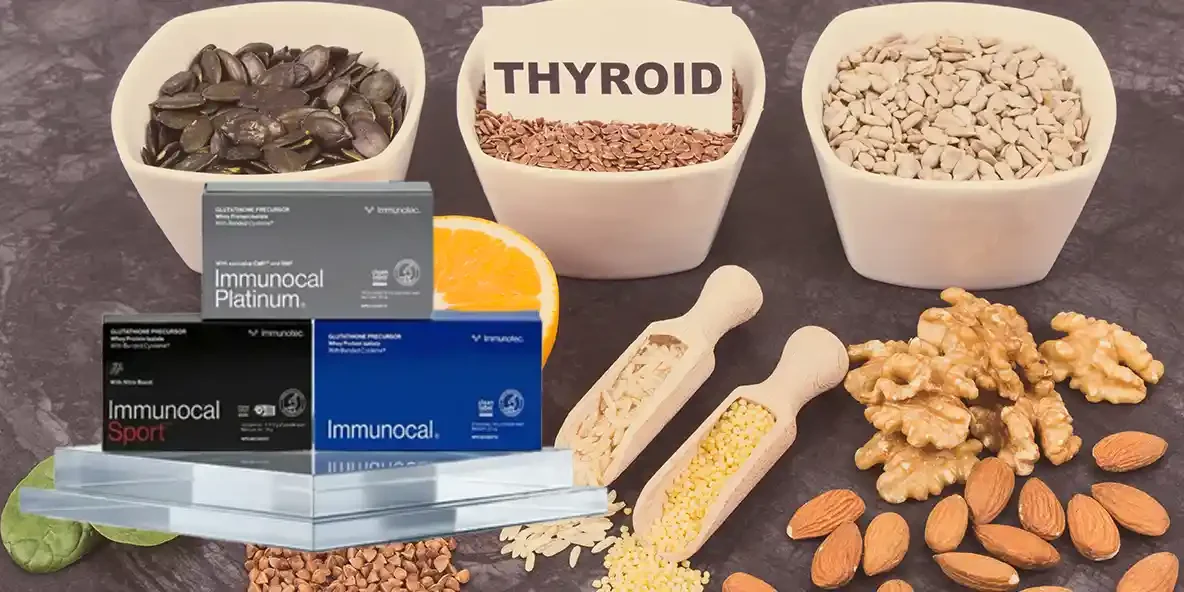
Immunocal® delivers the patented cysteine precursor your cells need to restore glutathione naturally, supporting the antioxidant defenses and immune balance that Hashimoto’s consistently depletes.